Showing posts with label Exercise. Show all posts

Wednesday, 15 May 2013

Healthy bones – preventing or minimising issues with bone health

How often do you think about the health of your bones? Despite their vital function, our bones seem to be a little undervalued, particularly in our younger years. The fact is however that we’d be in a whole lot of trouble without them. Unfortunately we don’t often see the effects of our diet and lifestyle choices on our bone health until we’re older and discover we have osteoporosis or another disease of the bone. By that point it’s too late to rectify the situation and all we can hope for is to reduce further damage.

The good news is that our bones are an ever changing structure. There is a constant movement of minerals in and out of our bones, and a constant building and breakdown of bone tissue. This is a natural occurrence and happens in response to the daily supply of nutrients we provide and the demands we place on our bodies. Whether you’re 25 or 60, you can use these basic principles of diet and lifestyle to improve the structure and function of your bones so they’ll best serve you, and keep you upright!
functiontofitness.com

Diet


Diet is a leading factor in having strong and healthy bones. Your bones are a storage place for a variety of minerals including calcium and phosphorus. These minerals are also found in the blood stream and are used for a variety of functions in the body. When levels of these minerals in the blood stream drop to below ideal concentration the body takes the minerals from the bones to top up blood levels. Ideally, we should ensure that our diet provides our bodies with enough minerals daily so that we don’t need to break down too much bone tissue to fill the demand. Makes sense right? Less breakdown means the bones are stronger and thicker, more breakdown means they’re weakened. Where do we get our minerals for bone health?

Dairy


Dairy was once touted as the best way, if not the only way, to get your calcium and bone loving nutrients. These days however there are a variety of reasons people steer clear of dairy, whether it be due to intolerances, ethical reasons such as veganism or the dislike or processed food (which most of our dairy is). The good news for you is that dairy is not your only option for calcium. If you’re.

1.       For the dairy eater

a.       low fat dairy has slightly more calcium than full fat products

b.      try swisse cheese, ricotta, mozzarella and cheddar for some of the higher calcium concentrations

c.       Consider finding raw unprocessed milk if it’s available in your country (it’s not allowed here in Australia). Given its not treated with heat many of its vitamins like vitamin A and D (both of which are important for bone health) are still present

2.       for the non-dairy eater

a.       If you’re using milk replacements like nut or soy milks check to see that they are fortified with calcium (you’ll see this on the ingredient list and also in the nutritional panel)
Plant foods


Many vegies, particularly dark green leafy vegies provide good sources of dietary calcium, not to mention other nutrients for bone health including manganese, magnesium, potassium, vitamin K, vitamin A and carotenoids.  


1.       Vegies

a.       Dark green leafy vegies – vegetables like spinach and kale and salad leaves like collard greens contain good amounts of calcium.

b.      1 cup of cooked spinach for example contains around 245mg calcium Broccoli is a good calcium source at around 60mg per cooked cup

c.       Most vegetables have small amounts of calcium present so mix it up and work towards a minimum of 3 serves of vegetables a day

d.      Vegies are a great source of nutrients like manganese and copper which are important for bone health. They also contain high amounts of carotenoids, vitamin A and importantly Vitamin K which involved in regulating calcium deposit

2.       Fruit

a.       Fruit like figs, rhubarb, dates and dried apricots contain good amounts of calcium

b.      Fruit is also a great source of potassium and other minerals great for bone health

c.       Quite often fruit juice is fortified with extra calcium

3.       Tips

a.       Lightly cook or steam your dark green leafies to help break down factors that prevent nutrient absorption

b.      Eat a variety of foods, variety is the key to any healthy diet

Nuts and seeds


Nuts and seeds are great sources of minerals

1.       Sesame seeds are a great source of calcium. A quarter of a cup contains around 350mg. You can eat them by the handful, use them as a crust on fish and throw them over salads

2.       Almonds – a small fist full of nuts contains around 75mg of calcium, not to mention magnesium

3.       Include a variety of nuts for their vast mineral content and health benefits

Fish


1.       Eating canned fish such as tuna and salmon with their bones is a good way to get additional calcium

2.       Fatty fish such as mackerel and salmon are food sources of vitamin D

Alkaline diet


Eating a diet high in vegetables and low in acid producing factors such as sugar and alcohol helps keep the bones healthy. How? Minerals often act as buffers, stabilising the pH. If your body is too acidic, minerals will be pulled from the bone or taken from the bloodstream to buffer and reduce the acidity back to your body’s acceptable levels. Eating a nutritious, more alkaline diet means less bone loving minerals being used for other purposes.

Lifestyle factors


Exercise


Exercise is huge for bone health. Your bones are constantly remodelling and rebuilding themselves based on the stress or load you place on them. If you try to lift an item and it puts pressure on your arm bones, your arm bones will over time become stronger in order to support the heavier load. Therefore one of the best ways to improve bone health and strength is to exercise and stress those bones! The best exercises for bone health are those with weight bearing such as

-          jumping rope (weight on the lower body)

-          impact aerobics

-          weight training (full body workout)

-          running/jogging (weight through lower body and spine)

Not into these? Any exercise that has some sort of resistance or weight component will do. Just get moving. Osteoporosis Australia has some great tips on exercise for bone health.

Get enough sunlight


Sunlight allows your body to produce vitamin D and really, you need vitamin D, not just for bone health but for general health and wellbeing. I’ve written an article on vitamin D if you’d like to know more about this fabulous vitamin.

Avoid smoking


The chemicals in smoking reduce your mineral absorption and draw minerals from the bone. Enough said really.

Avoid excess alcohol


Excessive alcohol intake is inflammatory and can cause mineral loss from bone and malabsorption of minerals.
 

Reduce Caffeine and soft drink intake


Both of these affect mineral absorption. Soft drinks are high in phosphorus which needs to be balanced with calcium for proper bone health. Excess soft drink intake can throw this balance out and reduce calcium absorption and bone health.
So there you have it, some diet and lifestyle tips to keep your bones strong and healthy into the future. It isnt complicated but the earlier you start, the better, so eat up.

Chris

Monday, 6 May 2013

Longevity - living longer and living well

ngm.nationalgeographic.com
Yesterday was a wonderful day. We celebrated my Nan’s 70th birthday with a BBQ, an insane amount of food, a huge number of family and friends and a lot of love and laughter. We adored my great Nan, who at almost 92 still has room to try multiple desserts, even after she sampled every other food on offer during the day. Bessie sits in her chair, covered in pink, propped up by her pillows and makes us laugh, reminding us that despite recent declining physical health, she’s still with us mentally. My Nan of course, is always the picture of love, kindness and positivity. At 70 she’s still going strong with no sign of slowing down. She is unlike most of the 70 year olds I come across. It seems to be a mistake to put my Nan and ‘70’ in the same sentence. They are not a fit.

image.jpeg
Great Nan and 2 of her kids, birthday
girl Nan + my great uncle Athur
As I was sitting here at my laptop wondering what to write about today, I kept thinking of my nan and great nan, and the long list of family members on both sides of my family who live well into their late 80’s and 90’s while maintaining their mental and physical wellbeing. We’ve certainly lost some much loved people well before their time. We are still mourning our most recent loss. A devastating blow to our family. We for the most part, certainly have good genes, however there is always a chance for something to go wrong, and the odds are that something will go wrong somewhere in every family. So I started thinking about longevity and aside from our genes, what factors have kept part of my family, and other families around the world, living so well into their later years. What keeps them active and fit, both physically and mentally?

Evidence demonstrates that longevity is based on 2 things, genetics and lifestyle choices. It is suggested that around 20-30% of our health and longevity comes from our genes. That’s great news, it means that 70-80% is up to us! Our individual behaviours and environment can alter our life expectancy and quality. Given we can’t switch our genes on and off as we please, let’s take a look at the key diet and lifestyle choices that we can make.

Diet  


We know that diet has a huge effect on lifespan. The dietary guidelines for longevity are really just those for good health. Let’s take a look at some simple recommendations

1.       Eat a Mediterranean style diet. The Mediterranean diet includes all the foods we know improve health. Lean protein, lots of fruit and vegetables, whole grains, beans and legumes, nuts and seeds. It’s nutritionally dense and high in fibre. A Mediterranean style diet is really just a healthy diet. It lowers your risk of disease and improves life expectancy.

2.       Eat a rainbow diet. If you’ve been reading my rainbow diet series, you’ll understand that each colour comes with its own set of nutrients, phytochemicals and antioxidants. Eating a varied diet ensures you’re getting everything you need to keep you healthy

3.       Avoid sugar and processed food. Increasing longevity is about improving health. You therefore want to avoid doing things that harm your health. True? Sugar and processed crap harm your health. When you eat a junk meal, you’ve not only put ugly unnecessary things into your body but you’ve also missed the opportunity to put good, healthy, nutrient dense goods in. Eating junk means you’ve deprived your body of necessary nutrition. Not the best way to achieve health and longevity.

4.       Calorie restriction. I am not a fan of this term, it sounds a bit harsh, but really all it means is that you eat a diet that is lower in calories. Research shows that those of us who eat less calories live longer than those that over eat. Makes sense right, when you think of over eating or high calorie diets what do you think of? I think of junk food, fatty foods, obesity, diabetes etc. Eating a healthy diet will naturally reduce your caloric intake.

5.       Don’t smoke or drink in excess. In California, the Seventh Day Adventists are recognised as having a particularly long lifespan. Why? Their religion requires that they don’t drink or smoke and are vegetarian. It also apparently encourages them to recreate on the weekends. We know what smoking does to the body. We know what excessive alcohol intake does. Limit your drink to a few days a week and only 1-2 glasses.

Let’s take a look at some foods you definitely want to consider for longevity

Fruit and vegetables – now really, when it comes to fruit and veg, just eat up. For the record, I don’t count potato as a veg, so if it’s your sole vegie choice, rethink. As for the rest of them, eat what you like. I would eat 2 pieces of fruit a day, and unlimited vegies. Try having half your plate be vegetables and eating vegies at at least 2 of your meals. You should easily get enough this way. Mix it up, be adventurous. If you’re not sure what your options are, read my articles on red, orange, yellow, green, black, white, purple and blue foods. There should be enough ideas there to get you started. There are definitely a couple of hero’s however and they’re listed below with the other hero’s.

Fish and seafood – a great source of trace minerals and omega 3 essential fatty acids, fresh fish is a great addition to the diet. Try including salmon, tuna, makeral, anchovies and sardines.

Hero foods


- Dark green leafy vegies like kale, spinach and silver beet. These greens are packed with nutrients and antioxidants. They’ve been shown to reduce inflammation and are alkalising to the body.

- Cruciferous vegetables like broccoli, cauliflower, cabbage. The cruciferous family provide many nutrients and antioxidants and contribute vital ingredients to our detoxification pathways. Our bodies can detox themselves but they need the right foods first.

- Berries – blueberries, blackberries, raspberries, strawberries, and things like cherries. Full of phytonutrients these fabulous fruits are fantastic for brain health and inflammation.

- Tomatoes – all colours and varieties. Consume them cooked and raw. Cooked ensures you’re getting the most lycopene, a potent antioxidant. They’re great for the heart and for men’s prostate health.

-Turmeric – this fabulous spice is a great antioxidant and is being investigated for its benefits in inflammation and degenerative disease. Add it to whatever you can. Use it fresh or dried.

- Garlic and onion – Both garlic and onion provide a great array of antioxidants and nutrients involved in our body’s detoxification. Onions are also a great source of quercetin, an antioxidant with anti-inflammatory benefits.

- Teas – I assume you know I’m going to put green tea here, but did you know there are fabulous teas in India and Africa, equally as loved for their health benefits. Definitely consider drinking green tea, but why not try the Indian tusli tea, or African Rooibos.

Nutrients


There are some important nutrients to help with the aging process also. You can largely get these through food, or you can purchase them in supplement form. I would suggest there is no point supplementing here if your diet is bad in the first place. Always aim to get diet right first, and supplement what you need thereafter.

Resveratrol – Red wine contains resveratrol, a potent antioxidant. This is not your ticket to drink the bottle after dinner. 1-2 glasses will do it. Again I’d always suggest having alcohol free days.

Alpha lipoic acid – a potent antioxidant that is both fat and water soluble. It plays a role in protecting the brain and nervous tissue, as well as blood sugar regulation.

Vitamin D – Many of us are deficient in vitamin D and given the unbelievable amount of research being conducted into this fabulous vitamin in recent years, I would suggest that we all need to focus on making sure our levels are topped up. See your doctor for a simple blood test to see what your levels are and either aim for more sun or supplement depending on what’s deemed necessary.

Lifestyle factors


Stress


In Sardinia in Italy, men live the same amount of time as women, which is unusual. When studying why, it is believed that it is due to a less stressful environment. This culture is particularly socially intertwined, with families often having lunch together, so recreational time is also high. Stress alters the body’s chemistry. It changes the way our body goes about its business. Short term, this is ok, it’s a genetic response required for survival. If you’re being chased by a lion, you want your body to kick into stressed mode. It’s not the time to be relaxed. However long term stress is not necessary, although common in today’s society. With our long work hours and go go go mentality, we may not be getting enough relaxation time to help our bodies wind down, to de-stress. Spending time with family and friends is a great way to relax, but it also fulfils the basic human needs of companionship and belonging. Who wants to be 100 and sitting at home by themselves every day? Both of these factors are important for longevity. What could you do today to relax a little more?
image.jpeg
                                                               Nan feeling the love
                                                           

A reason to wake up


Having a reason to get out of bed in the morning is vital for longevity. How often do you hear of elderly couples who when one dies, the other dies relatively soon after, despite being in good health? Quite often after retiring from the workforce, one’s health begins to go down hill. Why? They’ve lost their reason to get up. Not to mention it may have been a good source of social interaction for them. In Okinawa Japan, people get up every morning to perform activities such as going fishing. This has been shown to have a huge impact on the cultural longevity. Take an interest in life. Develop hobbies and participate in activities that make you happy, that give you excitement. What’s your reason for waking up? If it’s currently to go to work, you may have a problem down the track.

Be positive


A study conducted by the Mayo Clinic found that optimists reduced their risk of death by as much as 50% when compared to pessimists. Managing your stress levels, maintaining a social and recreational life and having a reason to get up every day should hopefully give you everything you need to have a positive attitude. Life can be tough and certainly as we age they can seem to get harder. Keeping a positive attitude helps you deal with what may be and funnily enough, aids your stress levels, your social life and your reason to get up every day!

Keep the brain active


If you don’t use it you lose it! We know that doing things like reading, playing games like sudoko and doing cross words as we age helps to keep the brain active. Simply having hobbies and doing activities that you enjoy may be enough. Mental decline is one of the saddest parts of the aging process. Look after your brain, use it, love it, and make the most out of it.


Keep the body moving


Increasing your activity levels can have dramatic results on your longevity. It reduces your risk of multiple diseases and helps in the maintenance and management of any illness. Maintaining physical strength and fitness as you age means you’re less likely to fall, and if you do you won’t hurt yourself as badly. You’re also more likely to be independent as you can continue to perform basic tasks unaided. Keep your body in good condition, as the saying goes, it’s the only place you have to live.

While we can’t change our genes, we certainly have a huge amount of control over how well we age and how long we’re here. As I look at my Nan and Great Nan, I see they do all these things. They certainly both eat good, healthy diets, they were physically active most their lives (my Nan still is), they have a great social circle and family around, they’re positive happy people and they’ve never stopped using their brains. I only hope I age with as much beauty and grace as they both are. I wish the same for you too.

Chris


Thursday, 18 April 2013

What is CrossFit exactly?

Out of my own curiosity more than anything else, I thought we’d take a look at CrossFit this week. I have a general idea about what cross fit is, I’m constantly seeing information about ‘WOD’ and I’ve heard the cross fit games being discussed once or twice but that’s pretty much the extent of my cross fit awareness. So, if you’re curious too, lets take a look.

What is CrossFit?

RichardHernandez_tire_th.jpg
Image from www.crossfit.com
Created in 2000 by Greg Glassman, Cross Fit uses high intensity training and ‘functional’ movement to improve overall fitness and strength. CrossFit describe it as increased work capacity across broad time and modal domains, which essentially means that your fitness is improving constantly and you’re prepared and physically capable of handling anything. Functional movements are essentially movements that you may need to perform on a daily basis, such as carrying heavy things, or jumping (you know, like Tom Cruise onto a lounge, straight up). The workouts are usually short and include activities like running, rowing, flipping tyres, climbing rope, weight training and body weight exercises.

There is a fantastic You Tube clip that gives you a pretty good idea of what cross fit is, I’d recommend taking a look http://www.youtube.com/watch?v=tzD9BkXGJ1M

What is the CrossFit way?

CrossFit is based on a short, high intensity daily workout, known as the Workout of the Day (WOD). These workouts can include anything from air squats, handstand push-ups, jump rope, to rowing to power lifting moves like the snatch. WOD’s are published daily on the cross fit website www.crossfit.com

For example, the WOD posted on their site for the start of the week include

Monday 130415

Three rounds, 15-12-and 9 reps, for time of:
135-pound barbell Thrusters
45 pound weighted Pull-ups
For weighted pull-ups, placing a 45-pound dumbbell between the legs above crossed ankles works great.
MattUpanavage_OHLungingducks_th.jpg
image from crossfit.com

Tuesday 130416

Five rounds for time of:
Row 500 meters
135-pound Bench press, 15 reps.
You have the option to post a comment with your time; Tuesday’s workout has over 200 comments.

Wednesday 130417

Rest Day
CrossFit also recommend a diet similar to the Paleo diet, with no refined carbohydrates and sugars. It focuses on protein, vegetables, nuts and seeds and some fruit.

According to their website, they’re also proponents of the idea of calorie restriction for health, so only eating enough calories to fuel the body.

ChrisBruno_LaurenPlumey_th.jpg
Image from crossfit.com
Who does Cross Fit?


Everyone it seems! Men and women of all ages. It doesn’t seem to matter what your fitness level in the beginning, although if it’s particularly low you may want to find a CrossFit trainer.


Where do you go to train?


There are thousands of qualified cross fit trainers and affiliated centres around the world. Alternatively you can follow the program online, by completeing the WOD.

The CrossFit games

CrossFit encourages competition. CrossFitters are often asked to compete against themselves by keeping score and tracking their own progress. There is also the cross fit games, where they can compete to be ‘the fittest on earth’. You need to qualify for these games, first in an open round, then by winning a regional competition before heading off to the big one in the USA. And why wouldn’t you try, there is $250,000 in prize money up for grabs

Support and controversy

As with anything, there are the lovers and the haters.

Truth be told, the current research is in favour of short explosive high intensity activity. However this does go against the ancient wisdom and so, like with anything, it takes a while for beliefs to change and people to catch up with science.

A majority of the criticism surrounds the fact that anyone and everyone has access to the WOD, you don’t need to have a trainer, therefore there is obviously the potential to hurt yourself by not doing the exercises correctly. I’ve already stated im no cross fit expert, that being said, it seems to me that this is no different to anyone who starts an unsupervised exercise program. Whether you get it from a magazine, copy a friend, find it on a website, if you’re doing the exercises wrong, you can get hurt. Because of the speed and explosivness required for cross fit, that risk might be a little higher. The cross fit website recommends that you take the time to learn their exercises, and go slow at first, getting comfortable with the movements and building your strength.
VerveL1_CFOneL1_NYCL1_RainierL1_CharlotteL1_MaxEffortL1_AlamoL1_KOPL1_NorthwestTucsonL1_33100L1_BCNL1_RevXL1_TulukaL1_CampBuehringL1_BCNCPC_USDCPC_RootsCFK_th2.jpg 
I think it looks fantastic personally. What do you think? Leave a comment about your experiences with CrossFit, let me know if I’ve missed anything.


Chris

Wednesday, 10 April 2013

Exercise Fiend - Mix it up with this Kettle Bell Full Body Workout

In the interest of looking at something different, I thought I’d take a look at kettle bell workouts today. Why? They look ‘interesting’, and by that I mean different and challenging. Not challenging in a ‘wow that is impossible’ but challenging as in ‘oh I really felt that!’

Any time we work our muscles in a way that is different to what they’re used to, we’re challenging them to adapt. Our bodies are beautifully clever things that love nothing more than to adjust, to grow, to rise to the challenge. We just need to set that challenge. If you’re not already working with kettle bells, this workout is just the challenge for you.

So, the most important question then is, what is a kettle bell?


The use of a kettle bell is great for strengthening the legs, lower back, core and shoulders. It’s a great toning exercise, and given you’re moving a lot of muscle groups at once, you should notice your heart rate increase, so you’re getting a little cardio too. Watch out if you have lower back or shoulder problems, I’d probably avoid using kettle bells, or see a qualified trainer to give you a hand.

Around-the-Body PassThe key to a kettle bell workout is to make sure you’re contracting your abs and core to protect your back, and to do the moves slow and controlled. Anyone can lift a light kettle bell and let gravity to the work on the way back down. The gain is in fighting the gravity!

A great kettle bell workout can be found at Women’s Health Magazine, http://www.womenshealthmag.com/fitness/kettlebell-workout

If you love the idea of using Kettle Bells or you’re after a bit more, take a look at Bodybuilding.com’s article on Kettle Bells.


Let me know how you like the workouts.

Chris


http://www.womenshealthmag.com/fitness/kettlebell-workout


Tuesday, 2 April 2013

A call out to Women -Why you should be lifting weights.

I was writing my usual fitness article when I remembered the age old comments almost all my female clients give when I suggest they workout with weights and build muscle,

‘Won’t I bulk up?’
‘I don’t want to look like a man’

I can absolutely understand their concern, I don’t want to look like a man either, but the fact is that that will never happen. Heres why;

  1. Men have different physiology than women.

What does that mean? Men have different hormones; they have much higher levels of testosterone, which enables them to build more muscle. You’ll notice a prepubescent boy is rarely abnormally muscular, even if they’re super active. Once they hit puberty however, and the testosterone kicks in, they begin gaining noticeable size. Women do not have these high levels of testosterone; therefore, it’s harder for them to build more muscle. Women on the other hand have more oestrogen than men, so luckily for us, we store fat! Although annoying at times, this does have an evolutionary purpose. We do need some fat for conception, pregnancy and so on.

  1. Not everyone who trains with weights ends up looking like this


Gaining muscle is not easy. If you walk into the gym, it’s highly likely that there are quite a number of ordinary looking guys walking around. And it’s also highly probable that they have been training for years to gain muscle. Can you tell? People who look like the above photo, or even just ordinary muscular guys train hard, with that goal in mind. They work at it, day in day out. It doesn’t just happen after 4 weeks of going to the gym. It’s the same for you. It is highly unlikely that you will ever do the type of training that is required to get that kind of muscle development, unless you so desire of course, even then, for a woman, its harder. There are also different types of training for different goals. Lets take a look at different female muscular types for the sake of comparison
Olympic weight lifter
http://www.bodybuilders.com/pics/sheila56.jpg
Female body builder


Figure competitor - Image from Female Muscle

Sports Model - Image from Bleacherreport.com (I tried finding an imagine with legs for comparison but apparently not many sports or bikini models have them)


Normal gym goer - nice transformation. You can see more definition in her arms, chest and abs and she's slimmed down through the middle. Congrats. Image from  Physically Fit website

So, as you can see, different goals, different training, different results. Which one suits you?

  1. Genetics

Some people can train day in, day out, focusing on nothing but wanting to look huge and their bodies will struggle. Ask the weedy guy in the Body Building shop buying 10kgs of Mass Gainer. If you’re someone who’s always been super thin, tall and lanky, skinny fat (you know, you’re skinny but everything jiggles anyway), you’re in that group that will always struggle to be muscular. It is doable with the right training and diet, but not if you just casually attend the gym. You probably have a friend who is naturally quite solid, or maybe you are. They put muscle on pretty easily, but even so will never be huge. It’s our genes, its our predisposition, its who we are.


If our lovely fitness model continues to train and eat the way she is currently doing, it wont matter if she trains for 20 years, she wont look like our wonderful body builder example. And vice versa, if our fantastic body builder example keeps eating and training like she currently is, she will never look like our awesome fitness model. That’s great news for you! Why? Because now you have no reason not to incorporate weights or resistance exercise into your life! Great huh.


 Benefits of Resistance training

Now that we’ve dispelled the fear of manliness, lets look at some of the ways that resistance training can benefit you.

  •  Improved muscle strength and tone – strength is just handy to have, but muscle tone if like a gift from god. No more chicken wing upper arms. No more butt on the back of your thighs… can I hear an Amen?

  • Weight management and weight loss by improving metabolism – Exercise is obviously good for weight management in general, but the more muscle you have, the more calories you burn. It is therefore easier to maintain your weight loss. This is because of your basal metabolic rate, or BMR. Your BMR is the amount of calories your body burns every day without you doing anything. It’s the energy used to keep your heart pumping and your lungs moving, for example. As long as you’re alive, you will burn these calories daily. Muscle tissues burn calories too, therefore the more muscle tissue you have, the more calories you burn.

  • Prevention and control of health conditions such as diabetes, heart disease and arthritis

  • Improved mobility and balance – When we’re younger, I think a lot of us take mobility and balance for granted, however if you think forward into your later years, they’re damn important. 

  • Improved posture – your musculature keeps all your bones in proper alignment. When the muscles are weak, the bones move around a little more than they should. For example, weak back muscles can contribute to your thoracic and cervical spine (the part of the spine that runs between your shoulder blades to the base of your skull) rounding, giving your that stooped over look. Strong muscles help to hold everything firmly in place

  • Decreased risk of injury – you’re less likely to fall or drop things. Because you have increased joint and muscle mobility, you’re less likely to pull muscles trying to lift things beyond your capability.

  • Increased bone density and strength – This is a huge one. Having osteoporosis in my family, I can tell you its important to avoid it! The thing about your bones is that they’re used to taking a certain amount of load. They’re used to things putting pressure on them and they need to be able to withstand that pressure, otherwise we’d turn to jelly. Therefore your bones adapt to changes in the pressure or load put on them. The heavier the load they have to carry, the stronger they get to be able to handle that load. This is called remodelling. Lifting weights causes your bones to store more calcium and minerals, to be stronger, less fragile for that heavy weight you’re going to lift.

  • Increased muscle-to-fat ratio – One of the biggest things with my weight loss clients, was the poor muscle to fat ratio. They almost all had very little muscle and lots of fat.  They idea is to get this ratio back into balance and that is done by resistance training.
The list really goes on and on. Resistance training is necessary.

Common Questions

Do i need to go to the gym?

Essentially no, you do not need to join a gym in order to do resistance training, although if you're really unsure or you have injuries, I would advise either joining the gym or hiring a personal trainer.

Essentially though in the beginning, you can do all the resistance training  you need at home.There are plenty of exercises you can do in your lounge room with minimal equipment and time, and plenty of resources available to help you do it.

The biggest difference between training at home and training at the gym is the equipment. Gyms have a variety of machines designed to help you do specific exercises and allow you to use heavier weights. At home, it is unlikely that you have weight lifting machinery in your lounge room, so your choices of equpiment are

- Your own body weight
- dumbells and barbells
- resistance bands
- exercise ball
- kettle bell
- chairs and tables
- towels (strategically placed for balance or muscle focus)
- workout DVD's
- YouTube clips and online resources

You can also find a variety of useful equipment at your local sporting store and if you want to exercise at home it will be worth a look.

Is one type of equipment better?

Not really, particularly in the beginning. When you first start out you will get a great workout just using the simple equipment above. The longer you train howver, the stronger you become and eventually you will need to graduate to machinary purely because your hands wont be able to hold the heavier dumbells anymore!

Both home training and gym training can be dangerous if done incorrectly, so make sure that you are doing the exercises correctly and if it feels wrong or is painful, stop. Always wear shoes too, a dumbell dropped on a bear toe hurts.

Resources

There are some fantastic resources available to you for whichever training option you choose

Check online

Obviously you could always keep track of my blog where I post a weekly workout and all the nutritional information you could ever need (shameless plug), join me on facebook (First Be Healthy.) or find me on Google+ (Christine Poile)

Otherwise...

Fitnessmagazine.com is a great site that has some simple, easy to follow home workouts your could try. Its perfect for the beginner

Muscle and Fitness Hers is for the woman wanting to build a little more muscle, say, to look like our fitness model for example. I personally love this site, and the magazine by the same name that you can buy here in Australia at your newsagent. muscleandfitnesshers.com

Bodybuilding.com is a great website for the brave woman who is definately over her fear of appearing manly. Like I've said numerous times, it wont happen, however the pictues of the men and women on this site are much more muscular, so don't freak out and remember, no fear. Alot of these people are professional figure and bodybuilding competitors, giving advice on training to gain more muscle. Click on the womens section and look at the amazing bodies. They also have a fantastic transformation section for the average joanne too, you can join and keep track of your own progress.

Read a magazine

Watch out when you're buying magazines, there are alot of really stupid ones out there that contain more advertisements than articles, their articles are just silly or they're very out there in their thinking. Steer clear of the weight loss ones too. You can do better. There are 2 magazines I love and have been reading for years. I have no hesitation in recommending them, they've never let me down.

Muscle and Fitness Hers which I've already mentioned is a great workout guide.

Oxygen Magazine has been around for a while but in recent years has been getting better and better. They're very sensible and talk about good food and the healthy fit lifestyle.

In case you haven't noticed, I personally think all types of muscular women are amazing. I dont want to look like a bodybuilder, but I've always thought one day I would like to do a figure competition. I think the unbelievable amount of focus, drive and discipline involved in reaching your peak in any sporting arena is commendable. If you wish to look like the powerful bodybuilder, go right ahead. IF you're prepared to do what it takes then you can get there, I dont want to make it sound like its impossible. You will get there. There is just a certain amount of work involved that most of us will never do to get that result, tis all im sayin. And if you decide that you do want to achieve any of these levels, let me know, I'll support you all the way!


Tuesday, 26 March 2013

Exercise Fiend - Ab workout - not your average crunch

Who loves crunches? Not me that’s for sure. I found a great list on Health.com of 24 different ab exercises to help tone, tighten and shrink that waist (do I sound like an infomercial?).
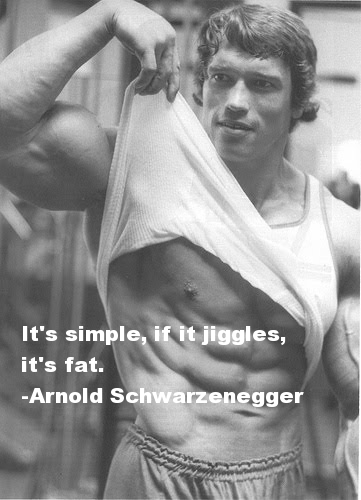
http://musclereview.net/wp-content/uploads/2012/06/arnold-abs-quote.jpg

Courtesy of the sixpackfactory.com. Thankyou.
Seriously though, a strong core is really important. It helps stabilise the posture and protects the body from injury when you’re doing other activities by supporting the spine. What is the ‘core’ I hear you ask? It’s those deep inner muscles that support the spine, ribs and pelvis, keeping everything in place and in alignment. They are below the outer abdominal muscles, which are the muscles you see, or don’t see. I’ve included a picture to the left to illustrate.

I spent alot of time researching this, you can thank me later. And in the interest of fairness...

Grumbles about how hard it is to find a non sexual picture of a womans abs where she's not holding a tape measure


The usual sit-ups and crunches work the outer abdominals, but they do little for your core. You need to challenge your core by doing more complex movements that require the muscles to work to stabilise your body. This usually involves challenging your balance. These types of exercises are often found in pilates.

Health.com's ab workout can be found at http://www.health.com/health/gallery/0,,20664616,00.html

This article has some very interesting exercises and I have to say, if you’re doing them in the gym you may feel like a weirdo. If you’re worried about this, don’t be, there are plenty of less conspicuous exercises in there.

I wouldn’t do all these exercises daily. I would probably pick 3 or 4 and do them twice a week as instructed. Try and pick ones that work different areas of the core and abdominals. You’ll notice some say they work the core, others say they work the obliques, or the lower abs. If you don’t know what any of that means, just do the exercise, if you’re doing it right you’ll feel where it’s targeting. If you’re struggling to choose the exercises, at the end of the 24 slides, there is another workout called 4 Weeks to Flat Abs, which is a preset workout. This title sucks. I do not condone it. If you’re overweight, simply doing ab exercises is not going to give you a flat tummy. That being said, the workout is good.

The key to ab exercises is control. Make sure you’re not using your hips or pulling with your head or your arms. If you’re just randomly swinging your arms or legs you’re not getting the full benefit, not to mention you’re at risk of kneeing yourself in the head during the Donkey Kickback. Try to focus on your abs. Even if you only move slightly, if its movement from your abs you’re getting the benefit.
If you go all the way through the 24 exercises you’ll notice that some are simply slight variations on a previous exercise, that’s cool too. Any adjustment you make keeps the body guessing and will stop you getting bored.

Enjoy. Aussies, we have 8 and a bit months until summer, I want to see some ripples!

Tuesday, 19 March 2013

Exercise Fiend - Running - Its possible for everyone!

One of the easiest and cheapest forms of exercise is the good old jog, or run. The only equipment you need is some good shoes and comfortable clothing. Once you have that sorted, off you go.

If you’re anything like me, there may be a little more involved. I struggled to try and run for years. I always felt completely uncoordinated, would huff and puff my way from one end of the street to the other and then have to walk for 5 minutes to get my breath back. Not to mention I would be aching and stiff the next day. I promise you, there is hope! These days it’s a little easier and I can run a lot further. In fact, I’m currently training for a 7.5km Alzheimer’s Australia Memory Walk/Jog in May, and the Blackmores Sydney Running Festival Bridge Run, which is 9km. For seasoned runners these aren’t long distances, but if you’re not currently a runner, they will probably feel impossible.

The Couch-to-5K ® Running PlanIf you’re struggling like I was, or just looking to get outdoors, I’d suggest you visit the Cool Running website.


It offers some fantastic programs for all levels of runner, but the Couch to 5K running plan is a brilliant program for beginners. This is the program I used. It uses a mix of jogging and walking to gradually build up your confidence and fitness.

Walking, Jogging or running are all great forms of cardiovascular exercise. The key with cardio is to get your heart to beat faster. If you choose walking as your preferred method, make sure you’re walking fast enough that you’re breathing is getting faster and you’re feeling warm. A gentle meander probably isn’t enough to do it, if it is, stick with it! For some of us, we need to speed it up and this is where the jog and run come in. The difference between a jog and a run is really just the intensity. A jog will have me puffing; a run will have me gasping.

According to the Victorian Governments Better Health website, the benefits of jogging and running include
  • Helping to build strong bones, as it is a weight bearing exercise
  • Strengthening muscles
  • Improving cardiovascular fitness
  • Burning plenty of kilojoules
  • Helping to maintain a healthy weight.
 Not to mention it can be great fun! I’m entering the above fun runs with my partner and a great friend of mine. My competitive partner runs off and does his thing, and my girlfriend and I jog along merrily and have a chat (between our huffs and puffs). It’s a great day out.

There are lots of reasons people take up running. I found a few wonderful sites to inspire you. Maybe you see yourself in these runners.


Every week Dicks Sporting Store (whereever that is) is showing interviews with different inspiring inividuals who discuss the reasons they run. It had me in tears.

http://www.dickssportinggoods.com/category/index.jsp?categoryId=20154356&camp=sn:traditionalmedia:general:runfor2me

Julie Weiss's story of 52 marathons in 52 weeks is truely a story of triamph, not to mention persistance and consistency.

http://www.prevention.com/fitness/fitness-tips/julie-weiss-runs-52-marathons-52-weeks?cm_mmc=Twitter-_-Prevention-_-fitness-fitnesstips-_-52Marathonsin52Weeks

Looking to have fun, get fit and be healthy? Grab your shoes and a friend and get outside! It’s free!

Chris